Diamonds
Diamond engagement ring buying guide for Fiji
Buying a diamond engagement ring in Fiji? The 4Cs in plain words, metal choices, ring size, budget, the certificate and what to ask in store.
5 min read
You have decided to propose. Maybe you live in Sydney or Auckland and are flying home to Fiji for a family wedding, or maybe you are in Nadi and the moment is finally close. Either way, you are about to buy something you will want to get right, and diamond jargon can make the whole thing feel harder than it is.
This guide walks you through the decisions in the order most people make them: the diamond, the metal, the size, the budget and the paperwork.
The 4Cs in plain language
Every diamond is described by four qualities, known as the 4Cs. The Gemological Institute of America created this system, and jewellers around the world use it.
| The C | What it measures | What it means for you |
|---|---|---|
| Cut | How well the diamond is shaped and polished | Drives sparkle and brightness |
| Colour | How colourless the stone is, graded D (colourless) to Z (light yellow or brown) | Higher grades look whiter, especially in white metal |
| Clarity | Tiny internal marks, judged at 10× magnification across 11 grades from Flawless to Included | Many small marks can't be seen without magnification |
| Carat | The size of the stone | Bigger stones cost more |
What matters most to the eye
When you look at a ring on a hand, you notice sparkle first. That comes mostly from the cut, so it is worth putting cut near the top of your list. A well-cut diamond can look livelier than a larger stone that is cut less well.
Clarity is graded under 10× magnification, so a stone with small inclusions can still look beautifully clean to the naked eye. Ask to see the diamond under a loupe and without one, and decide for yourself.
Colour depends partly on the metal. A slightly warmer stone can look perfectly white in yellow gold, while white gold tends to show colour a little more.
Choosing the metal for the setting
The band and setting matter as much as the stone, because your partner will wear this ring every day.
- 18ct yellow gold: 75% gold (stamped 750), with a rich, warm colour. Strong enough for everyday wear and for holding claws securely.
- 18ct white gold: also 75% gold, alloyed for a white look. Makes a diamond appear bright and crisp.
- 9ct gold: 37.5% gold (stamped 375), in yellow, white or rose. Harder-wearing and more affordable than 18ct, with a slightly paler colour.
Ask in store which settings are available before you set your heart on one.
Why not 22ct? 22ct is rich and pure, and it is at its best in bangles, chains and sets. For the small claws that hold a diamond in place, 18ct and 9ct are the usual choice.
Getting the ring size right
A surprise proposal makes sizing tricky. A few quiet options:
- Borrow a ring your partner already wears on the same finger and have it measured.
- Ask a trusted friend or family member who knows their size.
- Think about knuckles. A ring has to slide over the knuckle and still sit snugly.
Fingers can swell slightly in Fiji's heat compared with a cooler winter overseas, which is worth keeping in mind. Our guide to checking ring and bangle sizes before you fly to Fiji covers this in detail.
Setting a budget
There is no right amount to spend on an engagement ring. A good budget is one you can pay without stress, so you can enjoy the engagement rather than worry about it.
Once you have a number, use the 4Cs to decide where it goes:
- Choose a good cut first, for sparkle.
- Pick a colour and clarity that look clean and white to your eye, rather than chasing the top grades.
- Let the size of the stone fill in the rest.
- Leave room for the setting metal and any matching wedding band.
We'll show you rings across a range of budgets, side by side. If you are visiting on a non-Fiji passport and are not a Fiji citizen, you may also be able to claim VAT back through the Tourist VAT Refund Scheme.
Your diamond's paperwork
At Shreeji Jewellers, every diamond comes with a Certificate of Authenticity at purchase. It lists the diamond's carat weight, cut, clarity and colour, so you know exactly what you bought.
Keep the certificate somewhere safe with your receipt, as a lovely record of the ring.
If you are wondering whether a diamond is natural or lab-grown, and how paperwork shows the difference, read our guide to natural vs lab-grown diamonds and certificates.
Questions to ask in store
Bring this list with you. We're happy to answer every one.
- What are the carat, cut, colour and clarity of this diamond, and are they on the certificate?
- Is this diamond natural or lab-grown?
- What metal and purity is the setting, and is it stamped?
- Can I see the stone under a loupe?
- How does this ring compare with a similar one at a different size or grade?
- Does the ring come with a matching wedding band, or will one sit flush beside it?
A note on proposing in Fiji
Fiji gives you plenty of beautiful settings, from a quiet beach at sunset to a family gathering back home. Whatever you choose, keep the ring in your carry-on and the box somewhere you can reach easily when the moment comes. And if your partner's family has its own customs around engagements, it is worth asking how they would like the moment to unfold.
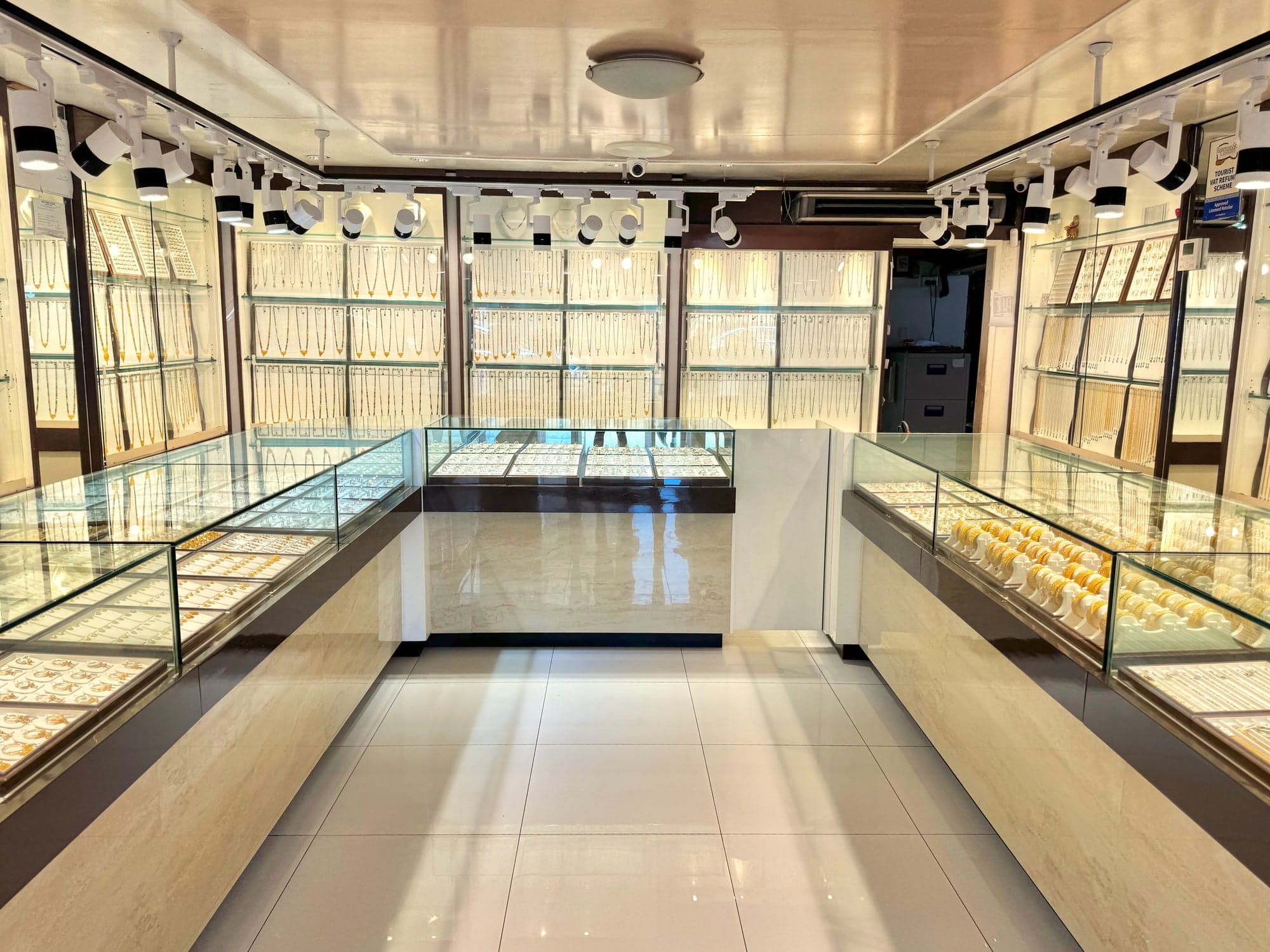
Choosing a ring at Shreeji Jewellers
Bring your partner's ring size, or a ring they already wear, and a rough budget, and we can show you a few stones side by side under a loupe. Ask to see the Certificate of Authenticity for any diamond you are considering, and check the purity stamp on the setting. You can browse our diamond jewellery before you come, but sales are in store only.