Weddings & traditions
The mangalsutra: meaning, regional styles and how to choose one
What a mangalsutra means, how styles differ by region, who gives it, and what to check on length, strands, pendant and the 916 stamp when you choose one.
4 min readChecked
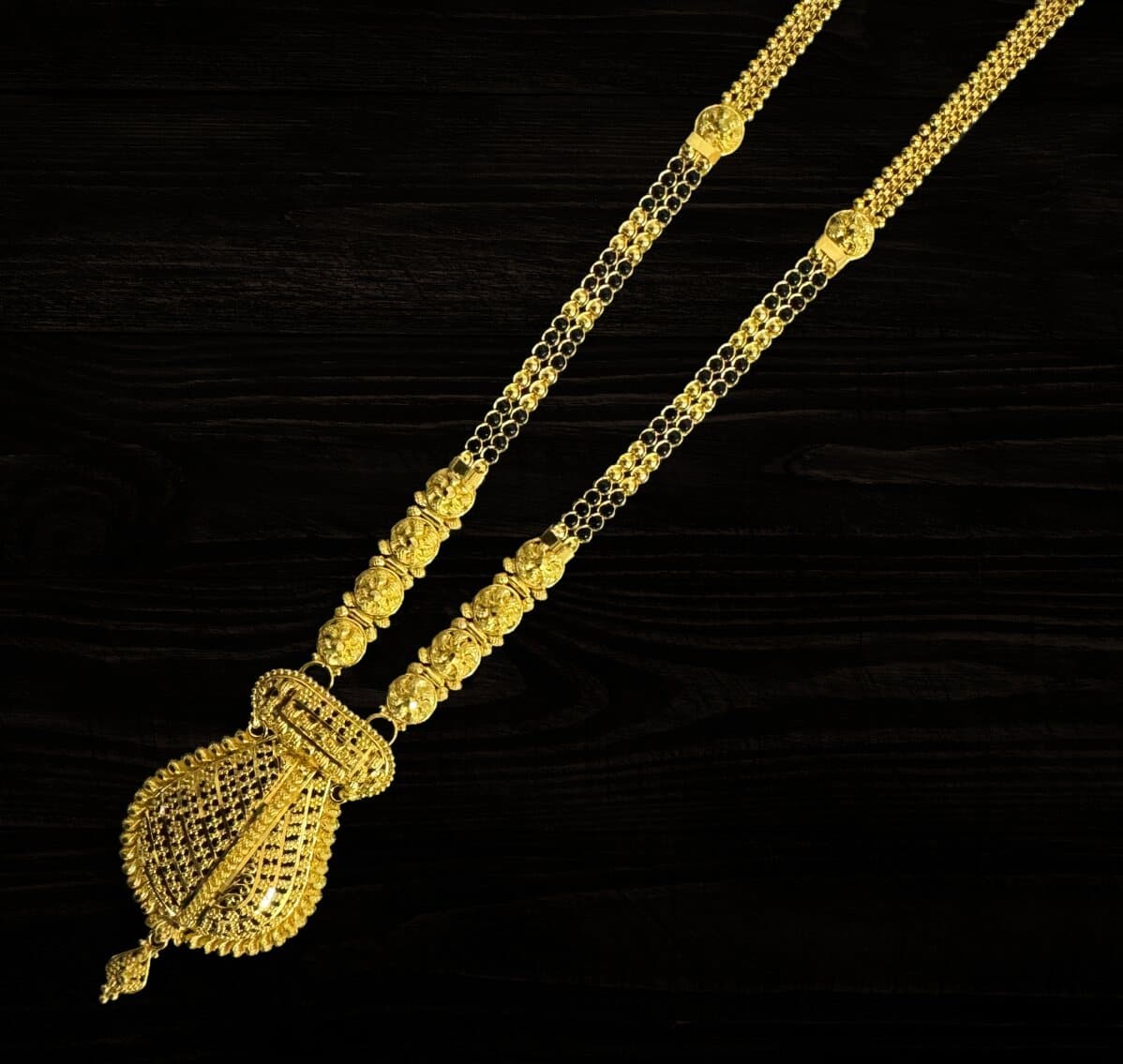
A mangalsutra is the necklace a groom ties around the bride's neck during a Hindu wedding. After the wedding she wears it as a sign that she is married. The name comes from Sanskrit: mangala means auspicious and sutra means thread, so a mangalsutra is, quite literally, an auspicious thread.
It is one of the most personal pieces of jewellery a woman owns. It is usually chosen with care, often by the groom's family, and many women wear the same one for decades. This guide explains what it means, how styles differ from one region to another, and what to look at when you choose one.
What the mangalsutra means
In the wedding ceremony, the groom ties the mangalsutra while mantras are recited, and in many families this is one of the moments that seals the marriage. It stands for the bond between husband and wife and, traditionally, for the wish that the marriage is long and protected.
Why black beads
Most mangalsutras combine black beads with gold. The black beads are traditionally believed to ward off the evil eye and protect the marriage. The gold is associated with Lakshmi and prosperity. The beads themselves are usually small glass beads strung on gold wire, so the black is a design feature, not a cheaper filler between the gold.
Regional styles
The idea is shared across much of India, but the design changes a great deal with region and community. Fiji Indian families trace their roots to both North and South India, so you will see a range of styles here.
Marathi (vati) mangalsutra
The Maharashtrian style usually has two strands of black beads and two small gold cups, called vati, at the centre. The two cups are often explained as representing the two families joined by the marriage. It is one of the most recognisable designs.
Gujarati mangalsutra
Gujarati mangalsutras tend to have a black bead chain with a more decorative gold pendant, sometimes with stones. Pendant designs range from small and plain to broad and ornate.
South Indian thali or mangalyam
In South Indian families the piece is called the thali, thaali or mangalyam. Traditionally the pendant is tied on a yellow thread coloured with turmeric, and some families later move it onto a gold chain. The shape of the pendant is often specific to the community or even the family, so the design is usually decided by the family rather than picked from a display.
North Indian mangalsutra
In many North Indian families the mangalsutra has been worn alongside sindoor and bangles, and the designs are often lighter and more varied: a black bead chain with a gold pendant, sometimes set with stones.
What you commonly see in Fiji
Among Fiji Indian families, the most familiar style is a black bead chain, often double strand, with a 22ct gold pendant at the centre, much like the piece in the photo above. Families with South Indian roots may choose a thali pendant instead. If you're not sure what your family expects, ask the elders before you shop. It saves a second trip.
Choosing a mangalsutra
Length
Mangalsutras come in two broad lengths:
- Long, roughly 60 to 75 cm (24 to 30 inches), sitting at the chest. This is the traditional wedding length and suits a saree or lehenga.
- Short, roughly 40 to 50 cm (16 to 20 inches), sitting near the collarbone. Easier to wear every day and under or over western clothes.
Many women have both: a long one from the wedding and a shorter one for everyday.
Single or double strand
A single strand is lighter and more modern. A double strand looks fuller and more traditional, and is the style most people picture. Some designs have three or more strands for an even bolder look.
The pendant
Look at the pendant from the side as well as the front. A larger pendant sits best on a fuller chain. Plain gold pendants are easy to wear with anything. Pendants with stones or detailed filigree look striking on the wedding day. If the bride already has a set for the wedding, bring a photo so the pendant style doesn't clash with the necklace.
Budget
Heavier and more detailed mangalsutras cost more. Tell us roughly what you'd like to spend, and we'll show you options to suit your budget side by side.
22ct gold and the 916 stamp
Most traditional mangalsutras are made in 22ct gold, which is 91.6% pure and stamped 916. Look for the stamp on the hook, the clasp or the back of the pendant. Every 22ct mangalsutra at Shreeji Jewellers carries it.
Everyday mangalsutras
Many women now wear a lighter mangalsutra day to day: a single strand of black beads with a small pendant, or a fine gold chain with just a few black beads. These sit well with work clothes and are comfortable all day. Some are made in 18ct gold with small diamonds. They carry the same meaning, in a form that suits modern life.
Caring for it
A little care keeps a mangalsutra looking its best. Take it off for swimming, heavy cleaning and the gym, store it on its own so it doesn't tangle, and have the clasp checked if it starts to feel loose. Our 22ct gold care guide has the details.
Choosing one with us
You can see the kinds of pieces we carry on our mangalsutra page. When you come in, tell us the length you want, single or double strand, and whether it's for the wedding or for everyday, and we'll put several side by side so the bride can try them on.