Gold guides
What does 22ct gold mean? The 916 stamp explained
What 22ct means, why it is stamped 916, how it compares with 24ct, 18ct and 9ct, and why it is the standard for Fiji Indian jewellery.
3 min readChecked
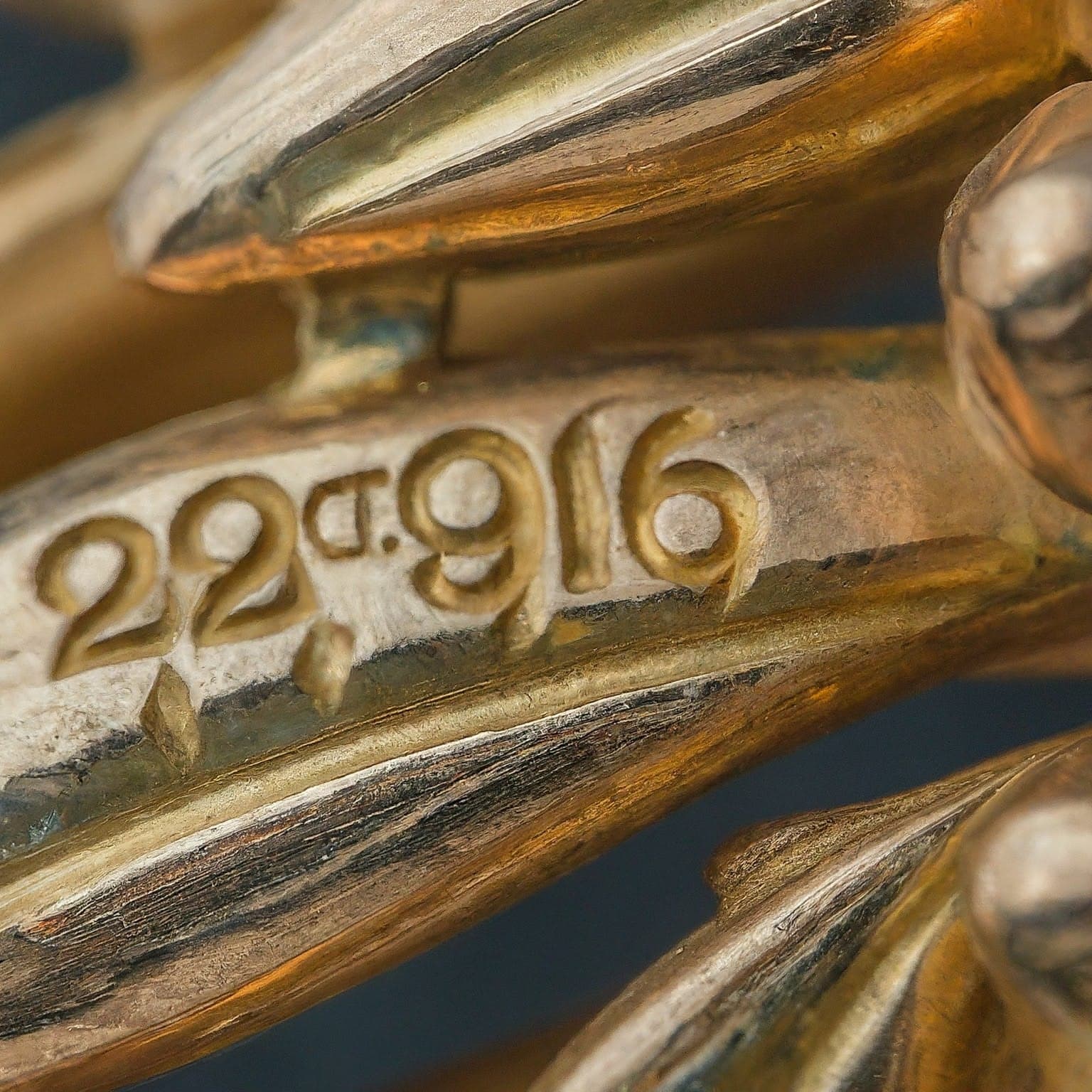
Turn over almost any gold bangle or chain bought in Fiji and you will find a tiny stamp, usually "916", sometimes with "22ct" beside it. It tells you how much of what you are wearing is gold.
Here is what it means, how it compares with the other carats you will see, and why 22ct is the gold most Fiji Indian families buy.
Carat is a measure out of 24
Gold purity is measured in carats (written ct, or K in some countries). The scale goes up to 24.
- 24ct is pure gold, or as close as refining gets: about 99.9%.
- 22ct means 22 parts gold and 2 parts other metals, out of 24.
Twenty-two divided by 24 is 0.916, so 22ct gold is 91.6% gold. That is where the 916 stamp comes from. The stamp counts in parts per thousand: 916 parts gold in every 1,000.
The other 8.4% is alloy, usually copper and silver, sometimes a little zinc. The alloy is there for a practical reason. Pure gold is too soft to hold its shape as jewellery, and the alloy makes it firmer.
How 22ct compares with other carats
| Carat | Gold content | Stamp | Typical colour |
|---|---|---|---|
| 24ct | about 99.9% | 999 | Deep, rich yellow |
| 22ct | 91.6% | 916 | Deep yellow, very close to 24ct |
| 18ct | 75% | 750 | Bright yellow; also made in white and rose |
| 9ct | 37.5% | 375 | Paler yellow; also white and rose |
At Shreeji Jewellers we stock 22ct, 18ct and 9ct. You will also see 14ct (stamped 585) overseas, especially in the USA and Canada. Our post on 22ct vs 18ct vs 14ct gold explains why gold bought in Fiji looks different from gold in a mall in Sydney or Vancouver.
Why the colour is so deep
Pure gold is a strong, warm yellow. Every metal added to it shifts the colour away from that. With only 8.4% alloy, 22ct keeps nearly all of pure gold's colour, which is why a 22ct bangle looks noticeably richer than a 9ct one next to it.
The alloy mix can tint the shade slightly. More copper gives a warmer, slightly reddish yellow; more silver gives a lighter, greener yellow. This is why two 22ct pieces from different makers can look a touch different side by side, even though both are 91.6% gold.
Treat it kindly
22ct is rich and pure, so treat it kindly. Families wear 22ct bangles and chains for decades. Take bangles and rings off for heavy work, and store pieces separately. Many people choose 18ct or 9ct for a ring they will wear while working with their hands, and keep 22ct for chains, earrings, bangles and occasion pieces. Our guide to caring for 22ct gold covers cleaning and storage.
Why 22ct is the standard for Fiji Indian jewellery
For many Fiji Indian families, 22ct is simply what gold means. There are a few reasons.
- Tradition. The custom of giving gold at weddings and festivals came with families from India, where 22ct is the usual purity for that kind of jewellery. A bride's set, the mangalsutra, Diwali bangles and gifts for a new baby are usually 22ct.
- Colour. The deep yellow is the colour people expect at a wedding, and it matches heirloom pieces passed down from mothers and grandmothers.
- Meaning. Families have long given gold to a bride as something that is hers to keep, to wear and to pass down.
Reading the stamp
On a chain, the stamp is usually on the clasp or a small tag beside it. On a bangle or ring, look on the inside. On earrings, check the post or the back of the hook. You may see:
- 916 on its own
- 22ct 916 together
- a maker's mark next to the purity number
Our 22ct pieces are stamped 916. Our post on how to read the purity stamp covers the other numbers and where to find them.
At the counter
When you are looking at 22ct gold with us, ask to see the 916 stamp and we'll point it out. If you are choosing between 22ct and a lower carat for a piece you will wear every day, tell us how you will wear it and we will show you both side by side.