Care & style
Choosing a simple 22ct gold chain: styles and lengths
A practical guide to plain 22ct gold chains: rope, box, foxtail, curb, flat and Singapore styles, lengths, clasps, the 916 stamp and layering.
4 min readChecked
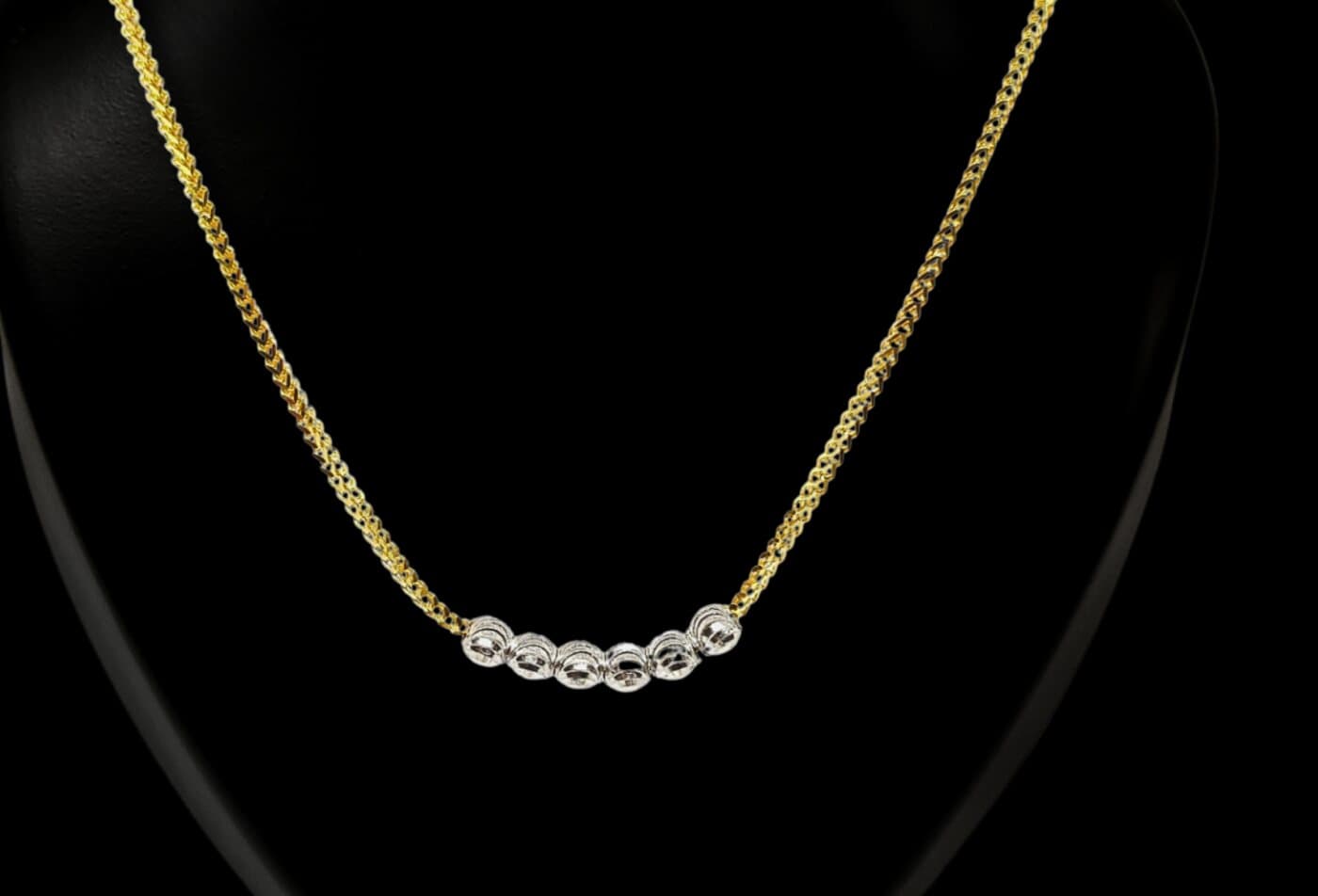
A plain gold chain is often the first piece of 22ct gold someone owns and the one they wear most. It might be a gift for a 21st, a chain to carry a family pendant, or the everyday chain a visitor buys on a trip home to Nadi. Because it gets so much wear, it is worth choosing well.
Here is what to look at: the pattern, the length and the clasp.
Why 22ct for a simple chain
22ct gold is 91.6% gold and carries the 916 stamp. On a plain chain, with no stones or patterns to distract the eye, the colour of the gold is the whole look, and 22ct has the deep yellow many Fiji families prefer. It also matches the 22ct bangles, earrings and pendants most people already own.
22ct is rich and pure, so some patterns suit everyday wear better than others, as below. If you want to compare carats first, see what 22ct gold means.
Common chain styles
Rope
Strands of small links twisted into a spiral, like a rope. It catches the light well from every angle and is one of the stronger patterns, because the links support each other. A good all-rounder.
Box and foxtail
A box chain is made of small square links joined into a smooth, square line. It is neat and sturdy and works well with pendants. A foxtail chain has links woven into a tight, braided-looking line. Both are firm and less prone to tangling than open-link chains.
Curb and link
Curb chains have flat, interlocking links that lie close together. They range from fine everyday chains to heavy statement pieces, and they are easy to repair if a link is damaged. Other open-link chains fall into this family too.
Flat
Flat chains, such as herringbone and snake styles, lie smoothly against the skin and have a liquid, polished look. They are beautiful as dress chains for functions and evenings out. Lay them flat when you take them off.
Twisted or Singapore
A Singapore chain is a flat link chain that has been twisted, so it sparkles as it moves. It is light and pretty, and a popular choice for women's everyday chains. Undo the clasp rather than lifting it over your head.
Choosing the length
| Length | Where it sits | Good for |
|---|---|---|
| 40 to 45 cm (16 to 18 in) | At or around the collarbone | A chain worn alone, small pendants, open necklines |
| 50 to 55 cm (20 to 22 in) | Just below the collarbone | Pendants, wearing over a collar, many men's chains |
| 60 cm and over (24 in +) | Mid-chest | Larger pendants, mangalsutra, layering under longer necklaces |
Neck size and build make a difference, so the same length can sit differently on two people. If you have a chain at home that sits where you like it, measure it flat with a tape measure from end to end, including the clasp, and bring that number with you.
For a mangalsutra, the length is often decided by tradition and by what the family prefers, so check before buying.
Thickness and everyday wear
Chains come from very fine to bold. Heavier or more detailed chains cost more, and we'll show you options to suit your budget.
For a chain you will wear every day:
- Fine chains look delicate and pretty, and suit occasions and layering.
- A chain with a little more body in a pattern such as rope, curb or box is a great everyday choice.
- Pairing with a pendant? Choose a chain with enough body to carry it comfortably. Bring the pendant in and we'll help you match one.
Check the clasp
A good clasp makes a chain easy to live with. When you try one on:
- Open and close it a few times. It should snap shut firmly, not feel loose or gritty.
- Check the type. A lobster clasp is secure and easy to use. A small spring ring is common on fine chains but fiddlier, especially for older hands. Hook clasps are common on traditional 22ct chains; make sure the hook closes snugly.
- Look for the stamp. The 916 stamp is usually on the clasp or a tag beside it. We're happy to point it out.
Layering chains
Two or three plain chains worn together is an easy way to wear more gold without a heavy necklace.
- Space the lengths about 5 cm apart, for example 40, 45 and 50 cm, so they do not sit on top of each other.
- Mix the patterns. A fine Singapore chain with a slightly heavier rope chain looks more considered than three identical chains.
- Keep to one carat. 22ct next to 9ct shows the difference in colour clearly. Keep layered chains in the same carat unless the contrast is deliberate.
- Fasten them one at a time and store them separately.
Caring for a gold chain in Fiji
Take your chain off before swimming in the sea or a pool, before sleeping and before sport. Put perfume and sunscreen on first and the chain on last. Wash it occasionally in warm water with a drop of mild dishwashing liquid, rinse and pat dry. Store chains hanging or laid flat in separate pouches so they do not knot. Our care guide for 22ct gold covers more.
At the counter
When you are choosing a chain with us, tell us how you will wear it: every day or for occasions, on its own or with a pendant. Ask to see two or three patterns at the length you want, try them on and see which one feels right. You can see some of our styles on the gold chains page.