Gold guides
Filigree, diamond-cut and two-tone: gold finishes explained
The craft behind gold jewellery: filigree, diamond-cut, two-tone, matte, hammered and antique finishes explained, with how each one wears and how to care for it.
4 min read
Look closely at two gold bangles of the same weight and purity and you'll often see completely different personalities. One is smooth and glowing, another glitters like it's covered in tiny mirrors, another looks like lace. The difference is the finish: the way the gold has been shaped and decorated by the maker.
Knowing the names makes it much easier to describe what you like, and to look after it once it's yours.
Why 22ct gold suits fine detail
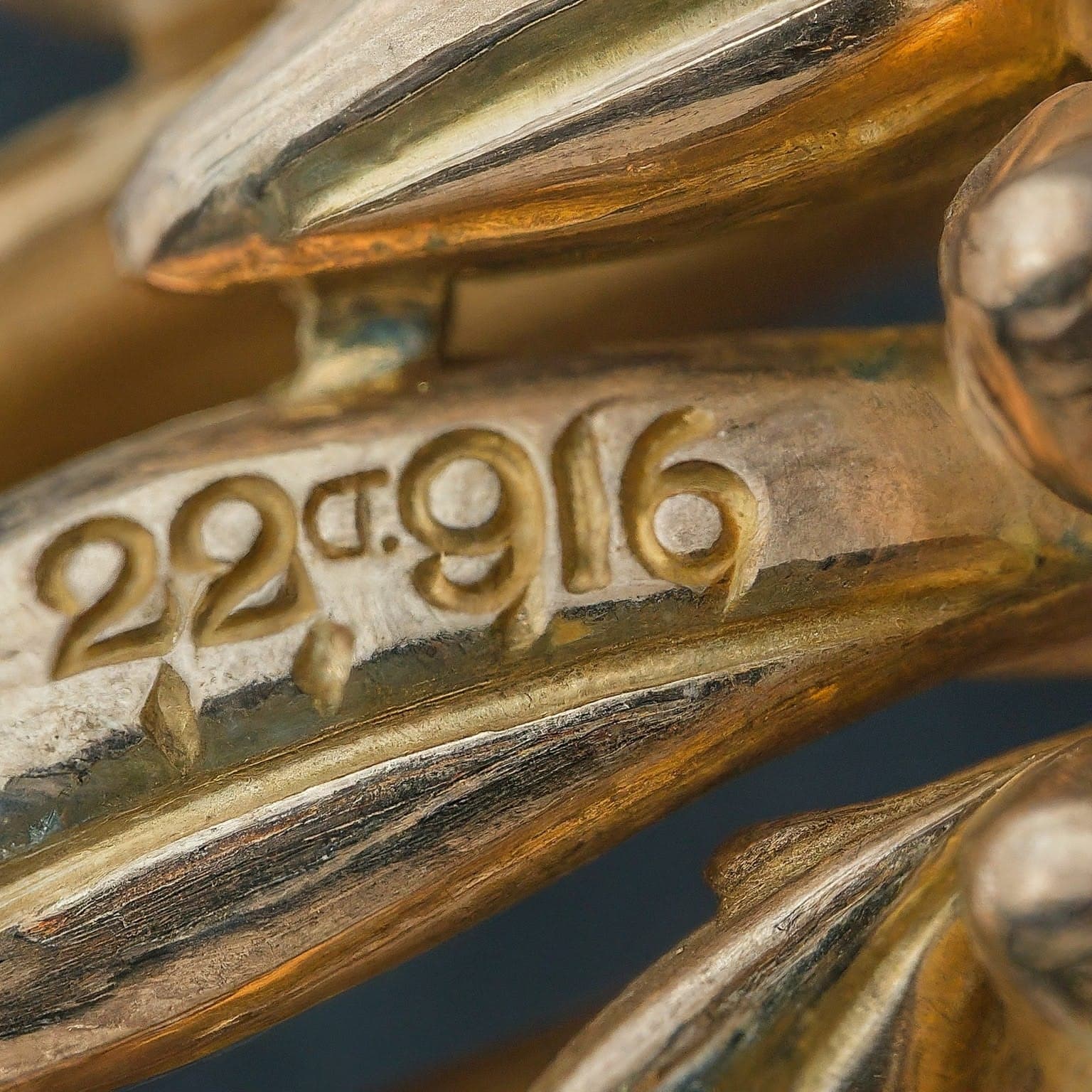
22ct gold is 91.6% pure, which makes it rich in colour and soft enough to be worked into fine detail by hand and by machine. That softness is why traditional jewellery from India and the Middle East is so detailed. It also means fine finishes deserve a little care, which we cover at the end.
Filigree
Filigree is one of the oldest jewellery crafts in the world. The maker draws gold into very fine wire, twists and curls it into patterns such as flowers, leaves and scrolls, and solders the pieces into a frame. The result is open and lacy, with light shining through.
In India, filigree is known as tarakasi, and some towns, such as Cuttack in Odisha, are famous for it. You'll see filigree in jhumkas, wide stud earrings, bangles and mangalsutra pendants.
What to know:
- Filigree pieces often look larger and heavier than they are, because so much of the design is air.
- The fine wires can catch on fabric and can be bent by a knock, so filigree is best for careful wear.
Diamond-cut
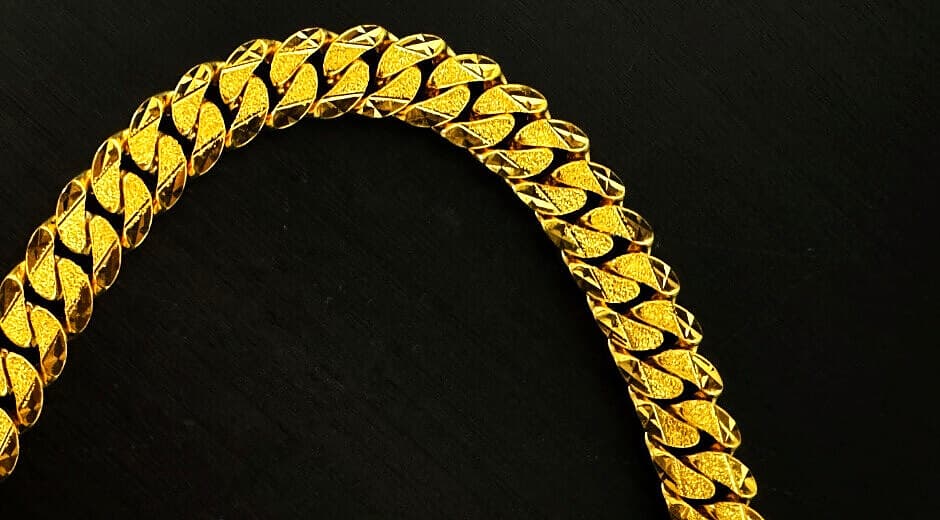
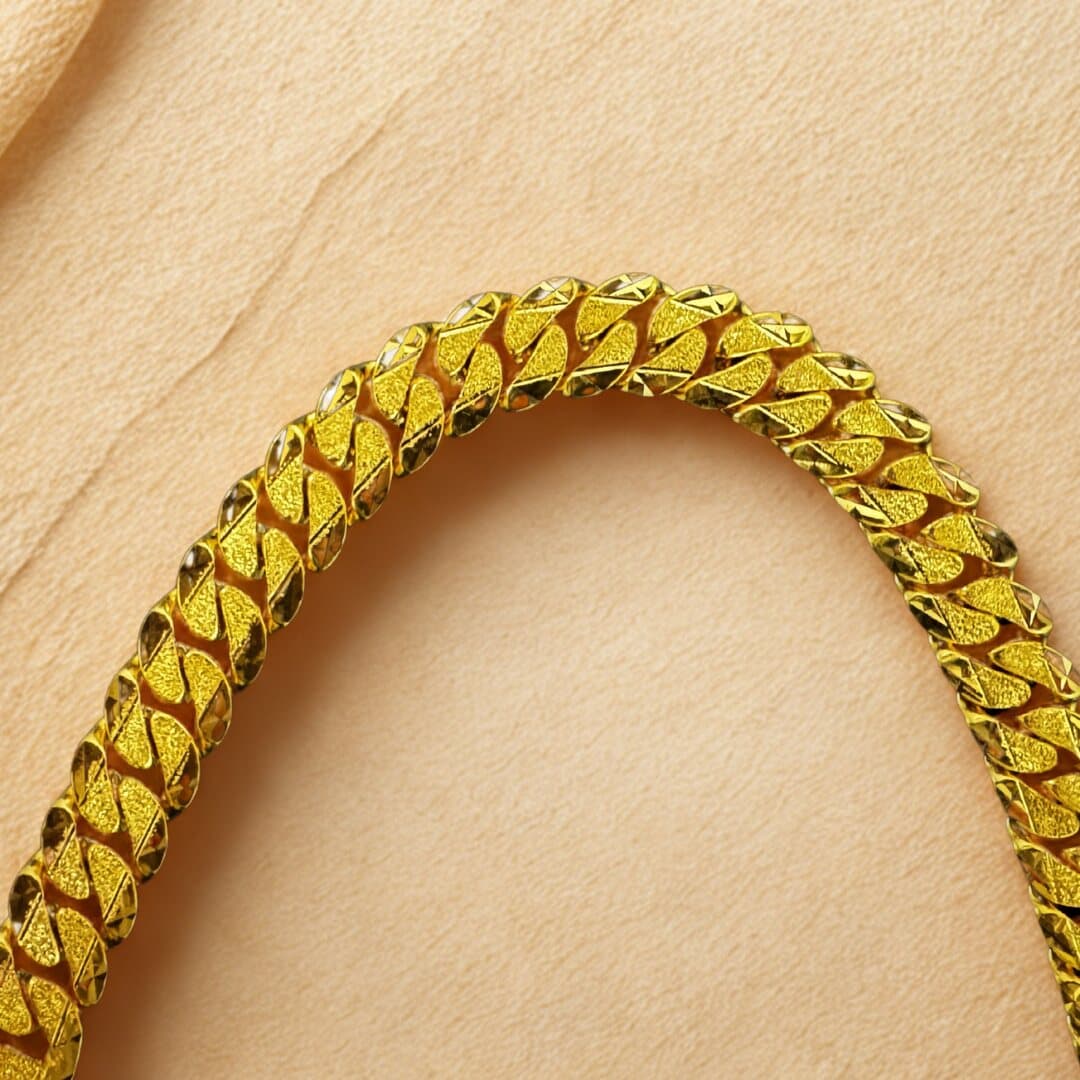
A diamond-cut finish has nothing to do with diamond stones. The name comes from the tool: a diamond-tipped cutter that carves tiny flat facets into the surface of the gold. Each facet catches the light, so the piece sparkles as it moves.
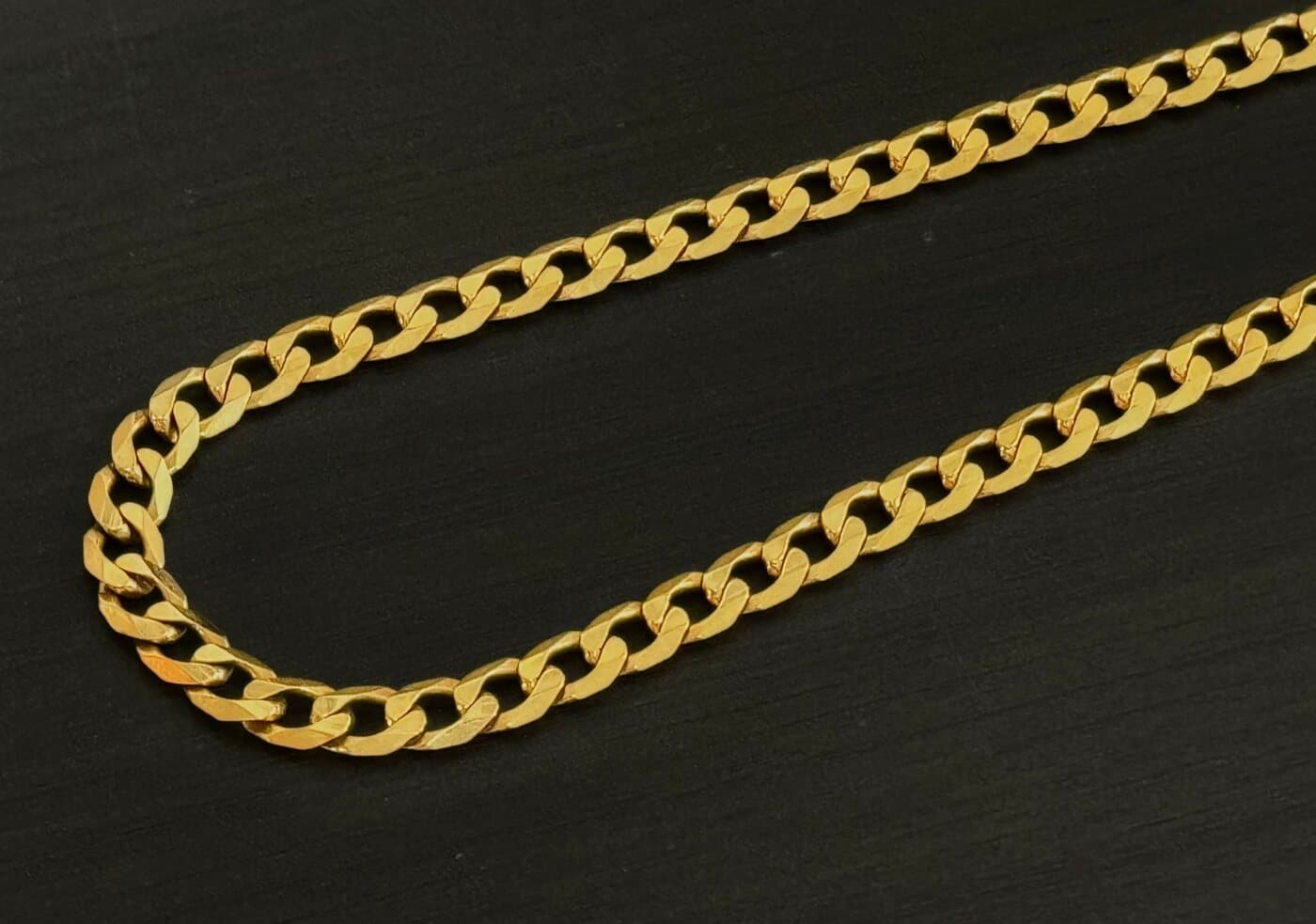
Diamond-cut work is common on chains, bangles and hoop earrings. Rope and curb chains are often diamond-cut so they glitter instead of just shine. The curb chain in the photo above mixes both: diamond-cut edges that flash, with a frosted sandblast centre on each link.
What to know:
- Diamond-cut pieces look their best when clean. A soft brush and mild soapy water bring the sparkle back.
- Over many years, constant rubbing can soften the facets slightly. That's normal wear.
Two-tone and tri-colour
Two-tone jewellery combines yellow gold with white gold, and tri-colour adds rose gold as well. The contrast picks out the pattern and makes a piece easy to wear with both yellow and white jewellery.
On many two-tone pieces, the white areas are finished with rhodium, a bright white metal from the platinum family. Rhodium gives a crisp, mirror-white look. With years of wear, it can soften on the parts that rub most, showing a warmer tone beneath. Our guide to yellow, white and rose gold explains more about how white gold is made.
Matte, satin and sandblast
Not all gold is meant to shine like a mirror.
- Matte or sandblast finishes are made by blasting the surface with fine grit, which gives a soft, velvety look.
- Satin or brushed finishes have fine parallel lines brushed into the surface, for a gentle sheen.
These finishes are often used next to polished areas, so the shiny parts stand out more. Over time, matte areas on everyday pieces slowly pick up a little shine where they rub. Many people like the softer, worn-in look this gives.
Hammered
A hammered finish is made with small hammer strikes that leave shallow dents all over the surface. Each dent catches the light at a slightly different angle, giving an organic, handmade sparkle. It's a good choice for everyday bangles and rings, because small marks from wear blend in.
Antique finish
An antique finish darkens the recesses of a pattern so the raised parts stand out, as if the piece had been worn and treasured for generations. It's popular for temple-style jewellery, jhumkas and bridal sets, and suits richly coloured wedding outfits.
To keep the antique look, clean gently with a dry cloth and avoid polishing cloths and cleaners on the darkened parts.
Stone-set and enamel
Finally, many traditional pieces add colour:
- Stone-set jewellery uses coloured stones, white stones or diamonds set into the gold.
- Meenakari is enamel work, where coloured glass enamel is fused into the gold. Jaipur in India is especially known for it. On many pieces the enamel is on the back, a hidden detail for the wearer.
Caring for detailed finishes
A few habits keep every finish looking its best:
- Put jewellery on last (after perfume, hairspray and lotion) and take it off first.
- Store pieces separately in soft pouches or a lined box, so they don't scratch or tangle each other.
- Clean gently. For most pieces, a soft dry cloth after wearing is enough. For a deeper clean, use lukewarm water, a drop of mild soap and a very soft toothbrush, then rinse and dry well. Skip this on antique and enamel pieces.
- Avoid harsh chemicals, such as bleach and pool chlorine.
Our 22ct gold care guide has the full routine, including tips for Fiji's sea and heat.
Seeing the difference in person
Finishes are much easier to understand in your hand than on a screen. At Shreeji Jewellers on Main Street, Nadi, our designs are hand-picked, and every 22ct piece is stamped 916. Come in, ask to see a filigree, a diamond-cut and a two-tone piece side by side, and you'll quickly find the look you love. You can browse the kinds of pieces we carry on our gold jewellery page.