Weddings & traditions
Gold nose studs: meaning, styles and how to choose one
The meaning of the nose stud in Indian tradition, the main styles from laung to nath, screw and bone fittings, and how to choose a gold nose stud you'll wear every day.
5 min read
A small gold nose stud is one of the quietest pieces of jewellery a woman can wear, and one of the most meaningful. For many Fiji Indian women it goes on in their teens or at their wedding and rarely comes off again. It catches the light when you smile, and it carries centuries of tradition in a piece smaller than a fingernail.
A little history
Nose ornaments have been worn in India for a very long time. Many historians think they became especially widespread during the Mughal period, when nose rings and studs were worn at court, and from there they became part of jewellery traditions across the subcontinent.
When families came from India to Fiji from 1879, the nose stud came with them. Many of the women who arrived in the girmit years wore small nose ornaments, and the tradition has been passed down ever since. You'll find out more about how gold travelled with those families in our post on family gold.
What the nose stud means
Meanings differ between communities, but some ideas are widely shared:
- Marriage. In many Hindu families, a nose ornament is part of a married woman's jewellery, along with the mangalsutra, bangles and sindoor. A bride often wears a larger nath on her wedding day.
- Coming of age. In some families, a girl's nose is pierced when she reaches her teens, as a sign that she is growing up.
- Health and wellbeing. Traditional texts and Ayurveda are often said to link a left-nostril piercing to women's health. These are beliefs rather than medical facts, but they explain why the left side is so common in North Indian families.
Today, many women wear a nose stud simply because they love it, and it suits everything from a saree to a work shirt.
The main styles
You'll hear many names for nose jewellery, depending on the family's roots.
Laung (clove stud)
Laung means clove, and the name comes from the shape: a small round top on a short stem, like a clove. It is the classic everyday nose stud, often a single tiny gold dome or flower.
Phul or koka
A phul (flower) or koka is a stud with a slightly larger, decorative top, often shaped like a flower or set with a small stone. Popular in Punjabi families, and a pretty step up from a plain dot.
Mookuthi
In Tamil and other South Indian families, the nose stud is called the mookuthi. Traditional designs are often set with a small cluster of stones arranged like a flower.
Nath (bridal nose ring)
A nath is a larger ring worn through the nostril, usually by a bride. Some are delicate hoops; others are wide and ornate, with a chain that runs back to the hair or the ear to carry the weight. The style varies a great deal: Maharashtrian, Rajasthani, Garhwali and Punjabi naths each have their own shape. In some families the bride's maternal uncle gives her the nath.
Nathni
A nathni is a smaller, lighter nose ring, comfortable enough to wear beyond the wedding day.
Fittings: how a nose stud stays in
The part you don't see matters just as much as the top. The main types are:
- Screw (twist) fitting. The stem is shaped in a gentle curl, so you twist it into the piercing. It sits securely and is very common in traditional Indian nose studs.
- L-shaped. The stem bends at a right angle. Easy to put in and take out, and fairly secure.
- Bone or ball end. A straight stem with a small ball at the end that pushes through the piercing. Comfortable, but it can take some force to put in.
- Push-back. A post with a small back, like an earring, used on some designs with a larger top.
If your current stud is comfortable, bring it with you. It's the easiest way to choose a new one with the same type of fitting and a similar stem thickness.
Choosing the right size
- Everyday: a tiny top, about 2 to 3 mm across, looks delicate and suits almost every face.
- Statement: a top of 4 mm or more, or a flower design, stands out more and looks lovely for festivals and weddings.
- Stem thickness: most nose studs have a thin stem. If your piercing is used to a particular thickness, check the new stud matches, because a much thicker stem can be uncomfortable.
Hold a few against your nose in the mirror. Small differences in size look surprisingly different on the face.
Why gold?
Gold is the traditional choice for nose studs, and for good reason:
- It doesn't rust or tarnish, so it stays bright even worn day and night.
- It's gentle on the skin. Higher-carat gold contains less of the other metals that can irritate sensitive skin.
- It matches. A gold nose stud sits naturally with gold earrings, chains and a mangalsutra.
Every 22ct gold piece at Shreeji Jewellers is stamped 916. Nose studs are tiny, so the stamp may be very small or not fit at all. Ask us about the purity of any stud you're looking at.
New piercings
If your nose is newly pierced, follow your piercer's advice on when to change the stud. A nostril piercing can take several months to heal fully, and changing too soon can irritate it. Once it has healed, don't leave it empty for long: nose piercings can start to close surprisingly quickly.
Caring for a nose stud
- Keep it clean. Wash around the stud gently when you wash your face, and dry it well.
- Take care with make-up and creams, which can build up around the top.
- Check the fit now and then. If a screw fitting starts to feel loose, have it checked before it falls out.
- Store spares safely. Nose studs are tiny and easy to lose. Keep them in a small box, not loose in a drawer.
Our 22ct gold care guide has more general tips.
Nose studs at Shreeji Jewellers
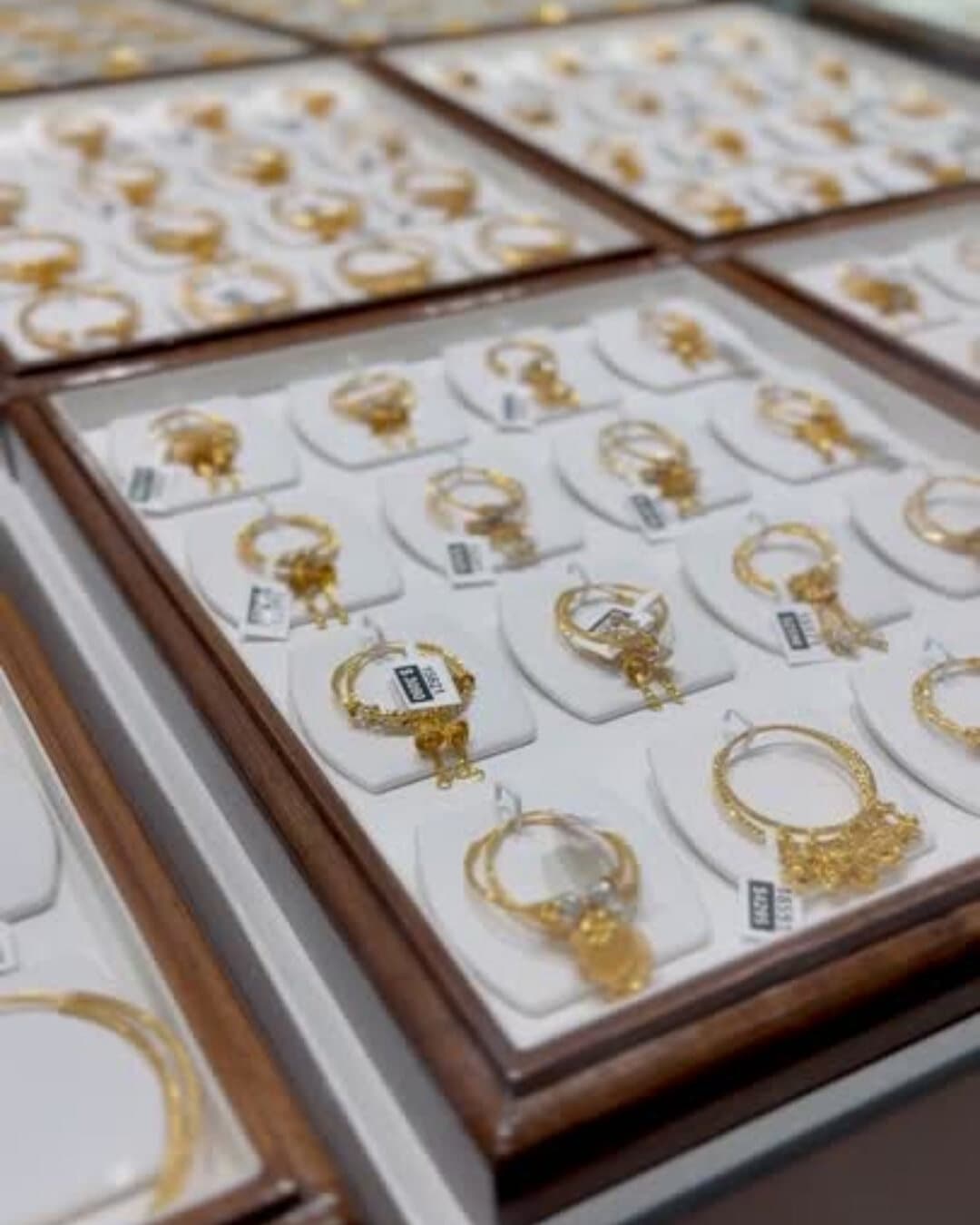
We keep gold nose studs at our shop on Main Street, Nadi, from tiny everyday studs to more decorative designs. If you're buying for a wedding, it's worth choosing the nose stud alongside the earrings and necklace set so everything matches. Bring your current stud if you have one, and we'll help you find a design and fitting that feel right.