Weddings & traditions
Family gold: why Fiji Indian families pass it down
Why gold is handed down in Fiji Indian families, from the girmit years to today: stridhan, heirloom pieces, keeping the stories and caring for family gold.
4 min read
Ask almost any Fiji Indian family about their gold and you'll hear a story. A nani's bangles, worn so long they're thin at the edges. A necklace set that has been worn by three brides. A small chain bought with the first pay packet after moving to Sydney or Auckland. In our families, gold is rarely just jewellery. It's memory you can hold.
Gold that crossed the ocean
Between 1879 and 1916, more than 60,000 indentured labourers, known as girmitiya, came to Fiji from India. Most arrived with very little, but many women carried small pieces of jewellery with them: nose rings, bangles, anklets and simple necklaces. These were among the few possessions that could survive the long voyage and the hard years that followed.
Over the generations that came after, gold became a way for families to mark how far they had come. Each new piece, bought for a wedding, a birth or a festival, added to a family's story. Many families today still have a piece or two that can be traced back to those early years.
Stridhan: a woman's own wealth
In Indian tradition, the jewellery a woman receives at her wedding is part of her stridhan, from Sanskrit for "a woman's wealth". It belongs to her personally, not to the household.
Gold has always been the heart of stridhan, for good reasons:
- It lasts. 22ct gold doesn't rust or tarnish, so it looks as good in fifty years as it does today.
- It's portable. It can be worn, carried and kept close.
- It's recognised everywhere. The 916 stamp means the same thing in Nadi, Sydney, Auckland and Vancouver.
For generations, this meant a bride's gold was her own security and independence, as well as her adornment. Many mothers still begin putting gold aside for a daughter's wedding years in advance, a piece at a time.
The pieces that get passed down
Some pieces are especially likely to stay in a family:
- Bangles, often given in pairs from mother to daughter or grandmother to granddaughter. Our guide to gold bangles explains the traditions around them.
- Necklace sets, worn by a bride and then by her daughters on their wedding days.
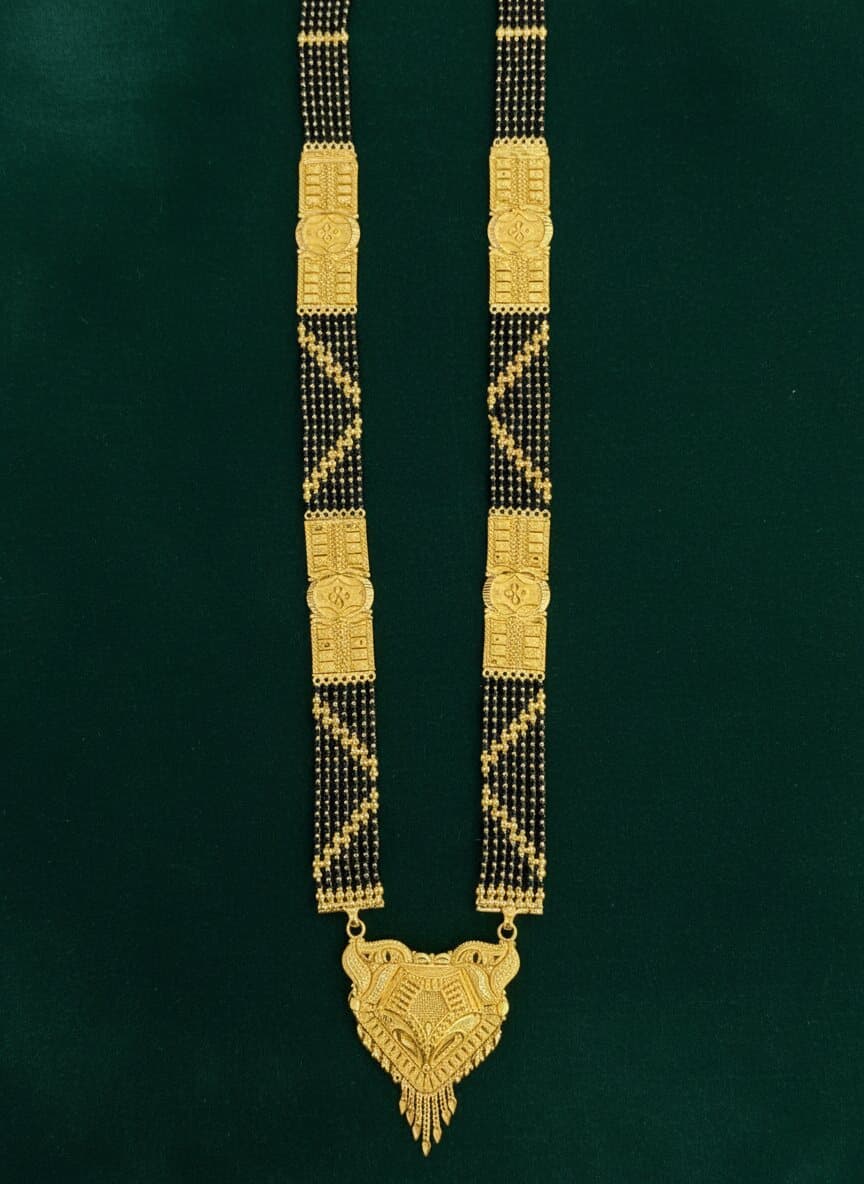
- Mangalsutra. Traditions vary: some women keep theirs for life, while in other families an older mangalsutra is passed on. Our mangalsutra guide has more.
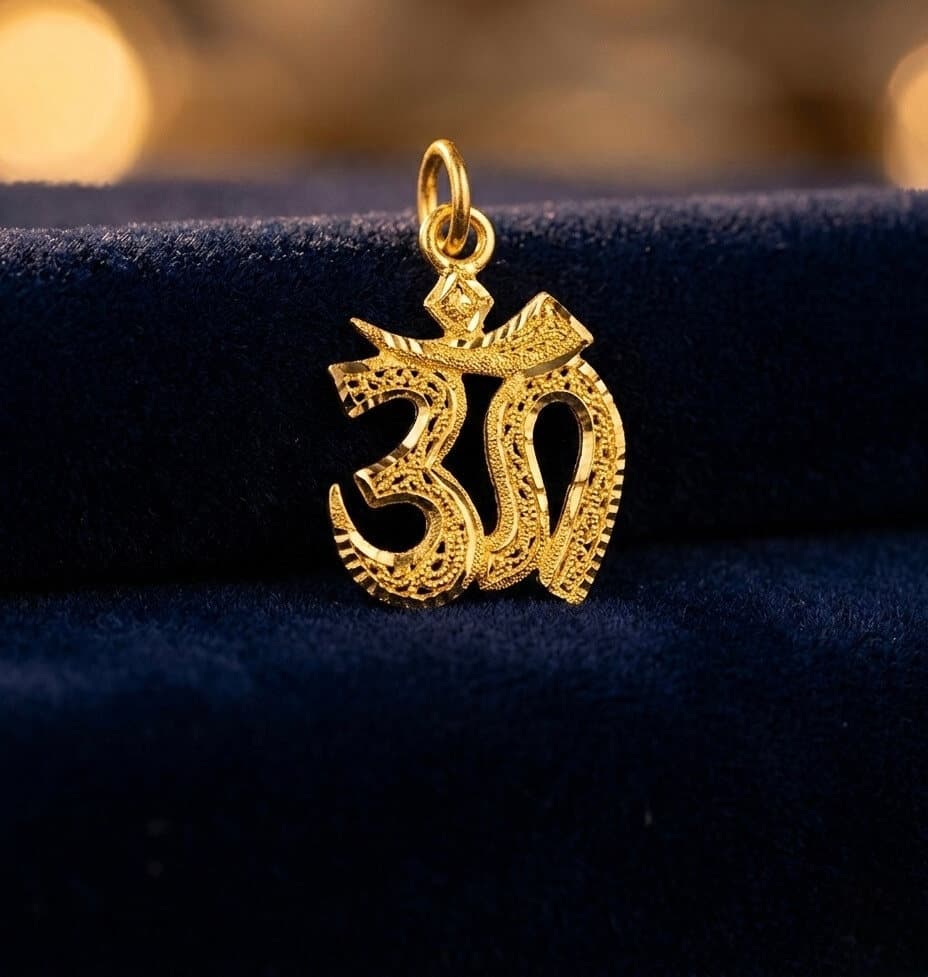
- Religious pendants, such as an Om or Ganesh, often given to a child and worn for decades. See our guide to symbols on gold jewellery.
- Rings and wedding bands, sometimes worn again by a grandchild on their own wedding day.
Mixing old and new
Many brides today love the idea of wearing a family piece on their wedding day, alongside something new chosen just for them. It's one of the nicest ways to honour the past.
A few tips if you're planning this:
- Bring the family piece when you shop. It's much easier to choose new pieces that match its colour, finish and style when you can see them side by side.
- Check the colour. Older 22ct gold and new 22ct gold can look slightly different, depending on the finish and how the piece has been worn. That's part of its character.
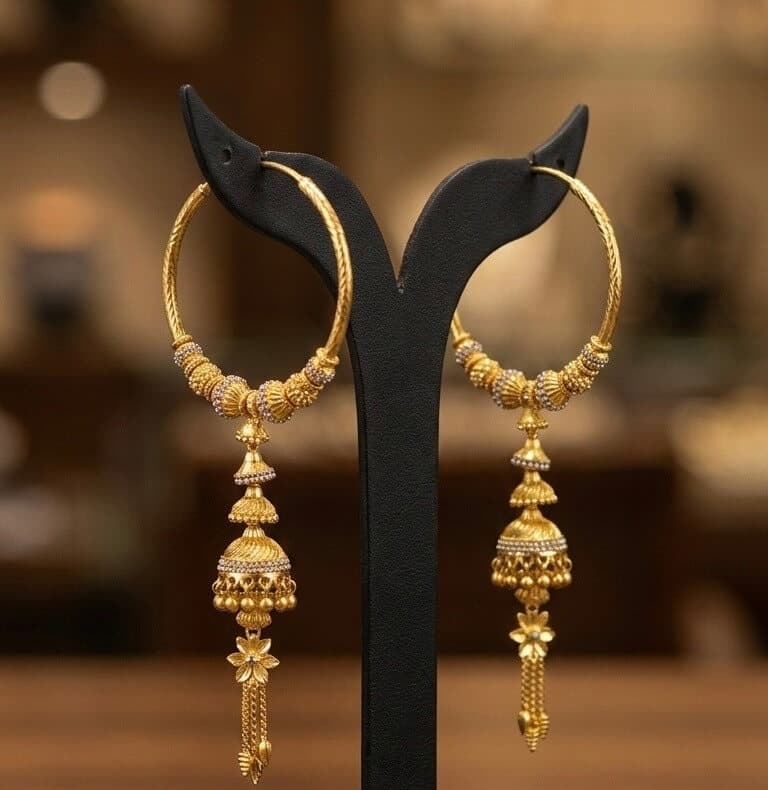
- Decide what goes where. Often the heirloom piece takes centre stage, such as a grandmother's necklace, and new earrings or bangles are chosen to complement it.
Our Fiji Indian wedding jewellery guide covers the full bridal set.
Keeping the stories
The gold lasts for generations. The stories don't, unless someone writes them down. A simple habit makes family jewellery much more meaningful for the people who'll inherit it:
- Photograph each piece, front and back, including any stamp.
- Write down who it belonged to, when and where it was bought or given, and for what occasion.
- Keep a note with the piece, and a copy somewhere safe, so the story travels with it.
- Tell the stories out loud. Diwali, weddings and family visits home are good moments to bring the old pieces out and share them.
For families split between Fiji and Australia, New Zealand, the USA or Canada, this matters even more. A small notebook or a shared family photo album keeps everyone connected to the same pieces.
Caring for family gold
Old pieces deserve gentle care:
- Store each piece separately in a soft pouch or lined box, so pieces don't scratch or tangle each other.
- Keep it dry and secure. In Fiji's humidity, a dry, closed box is better than an open dish.
- Clean gently with a soft dry cloth. Skip harsh cleaners, especially on antique-finish pieces.
- Wear it. Jewellery that's worn is jewellery that's loved, and it reminds everyone of the person who wore it first.
Our 22ct gold care guide has more.
Starting a new heirloom
Every family heirloom was once a new piece. If you're buying gold for a daughter, a granddaughter or yourself, you're starting a story someone may tell in fifty years.
At Shreeji Jewellers on Main Street, Nadi, we've been part of these stories since 2004. Every 22ct piece we sell is stamped 916, and every design is hand-picked. Come in with your family, bring any pieces you'd like to match, and take your time choosing. You can browse the kinds of pieces we carry on our gold jewellery page.