Weddings & traditions
Om, Ganesh, lotus and more: symbols on gold jewellery
What the symbols on gold pendants mean, from Om, Ganesh and Lakshmi to the lotus, peacock and evil eye, and how to choose one as a gift.
4 min read
Many of the most treasured pieces of gold jewellery are small: a pendant on a fine chain, a small motif on a bracelet, a design worked into a bangle. Often they carry a symbol, chosen for what it means as much as for how it looks.
Fiji is home to families of many faiths and backgrounds, and you'll see a wide range of symbols in gold. Here are some of the most common, what they mean, and how to choose one with care.
Om
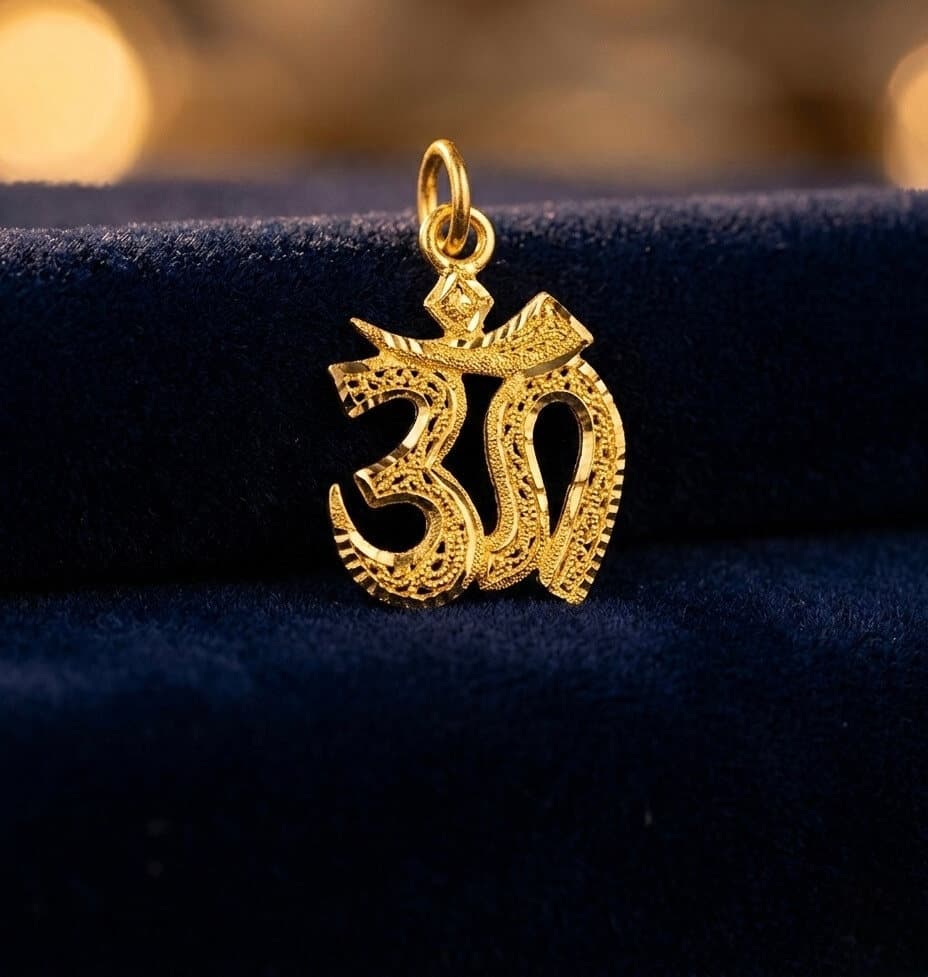
Om (also written Aum) is the most sacred sound and symbol in Hinduism. It is chanted at the beginning and end of prayers and mantras, and it is understood to hold the essence of the universe.
An Om pendant, like the one in the photo above, is one of the most popular religious pieces in Fiji. It's worn as a quiet sign of faith and a reminder to stay centred. It's a meaningful gift for almost any milestone, from a child's first chain to a 21st birthday.
Ganesh
Ganesh (or Ganesha), with his elephant head, is worshipped as the remover of obstacles and the lord of beginnings. Prayers to Ganesh open most Hindu ceremonies, including weddings.
That's why a Ganesh pendant is a lovely gift at the start of something: a new baby, a first job, a move overseas, a new home or a marriage.
Lakshmi
Lakshmi is the goddess of wealth, prosperity and good fortune. She is honoured above all at Diwali, and gold itself is closely linked with her. That's one reason families buy gold on Dhanteras, two days before Diwali. Read more in our Dhanteras and Diwali guide.
Lakshmi appears on pendants, and the motif is often worked into traditional necklaces, sometimes called Lakshmi haar.
The lotus
The lotus grows out of muddy water yet opens clean and beautiful, so in Hindu and Buddhist traditions it stands for purity and spiritual growth. Lakshmi is often shown seated on a lotus. As a jewellery motif, the lotus appears on pendants, earrings and bangles, and it suits people who'd like a meaningful design that is gentle rather than overtly religious.
The peacock
The peacock is the national bird of India and a favourite motif in Indian jewellery. It stands for beauty, grace and pride, and it is linked with Lord Krishna, who wears a peacock feather in his crown. Peacocks appear across bridal sets, jhumkas and pendants, often with coloured stones or enamel picking out the tail.
The mango (paisley)
The curved teardrop shape known in English as paisley is called kairi or ambi in India, after the mango. It is often linked with fertility and abundance and is one of the oldest motifs in Indian design. Look closely at bridal necklaces and bangles and you'll often find it.
The evil eye and black beads
Many cultures believe in protecting loved ones from the evil eye: harm caused by envy or an admiring look. In Indian traditions this is called nazar, and black is believed to ward it off.
You'll see this belief in:
- The mangalsutra, where black beads are traditionally believed to protect the marriage. Our mangalsutra guide explains more.
- Baby bracelets with a few black beads on gold, sometimes called nazariya, given to protect a new baby.
- Blue eye charms, from Turkish and Mediterranean traditions, which have become popular around the world.
Symbols of other faiths
Shoppers in Fiji also look for:
- The cross, worn by Christian families as a sign of faith, often given at baptism, confirmation or a 21st.
- Allah and Ayat al-Kursi pendants in Arabic script, worn by Muslim families, and the crescent and star.
- The Khanda, the emblem of the Sikh faith.
Whatever the faith, it helps to know the customs of the person who'll wear it. Some families prefer a religious pendant to be given at a particular time, or blessed before it's worn.
Symbols of love
Not every symbol is religious:
- Hearts for love, from a first gift between a couple to a daughter's birthday.
- Initials and names for a personal touch.
- Infinity signs for a love or friendship meant to last.
A note on gold below the waist
In many Hindu families, gold is treated with respect because of its link with Lakshmi, so it is traditionally not worn on the feet. Anklets (payal) and toe rings (bichiya) are usually made in silver instead. It's a custom worth knowing if you're choosing a gift for a bride.
Choosing a symbolic piece as a gift
- Ask the family. If you're unsure what's appropriate, especially for a religious symbol, a quick word with a parent or grandparent helps.
- Think about size. A small pendant suits everyday wear and a fine chain. A larger, detailed one makes a statement for festivals and weddings.
- Choose the chain too. A pendant needs a chain strong enough to carry it. Our guide to choosing a 22ct gold chain can help.
- Check the stamp. 22ct gold is stamped 916. Our purity stamp guide explains where to find it.
For more gift ideas by occasion, read our guide to gold gifts for babies, birthdays and graduations.
Finding the right piece
At Shreeji Jewellers on Main Street, Nadi, we keep a range of 22ct gold pendants and chains to go with them, and every design is hand-picked. Tell us who the gift is for and what you'd like it to mean, and we'll show you a few options side by side. If you're overseas and planning a visit, call us on +679 670 7877 or message us on Viber at +679 806 4660 to ask what's in the shop before you come.